
Modern professionals are not just asking “Where can I work?” but also “What kind of impact does my workspace create?” and “Will I feel welcome there?” Sustainable and inclusive coworking spaces reduce environmental impact while welcoming everyone with green design and accessibility
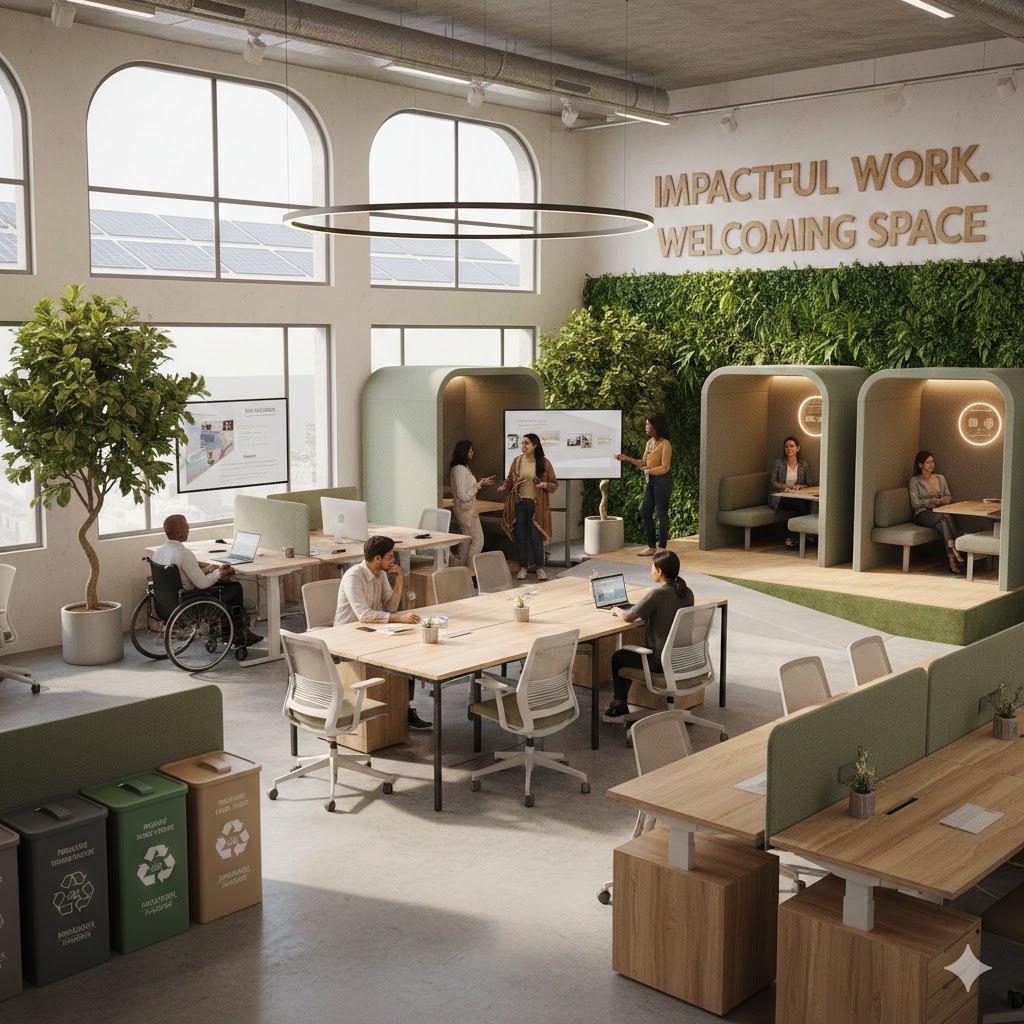
Why Coworking Is Naturally More Sustainable
Shared spaces use resources more efficiently than individual offices because desks, meeting rooms, printers, lighting, and HVAC are all pooled instead of duplicated across multiple locations. Studies show that coworking models can significantly lower carbon footprint compared to traditional offices by maximizing occupancy and reducing wasteful underused space.
Eco-focused coworking operators in India are also adopting LED lighting, smart HVAC, and better daylight use to cut energy consumption while improving comfort for members.
Green Practices You See in Modern Coworking Spaces
Sustainability is moving from “nice to have” to standard expectation in coworking design. Common green practices now include:
- Use of recycled or upcycled furniture, low VOC paints, and eco certified materials.
- Smart lighting and motion sensors that dim or switch off lights when areas are vacant.
- Solar panels or renewable energy contracts to reduce reliance on fossil fuels.
- Waste segregation, recycling bins, and sometimes compost programs for pantry waste.
These steps lower utility bills and attract ESG conscious startups and corporates who want their office choice to reflect their values. Sustainable and inclusive coworking spaces now prioritize recycled furniture and solar power.
“TStep-free access, quiet zones, and green energy turn a regular office into a truly modern coworking community.”
Designing Spaces That Everyone Can Access
A truly modern coworking space is not just beautiful it is usable by as many people as possible, including those with mobility, sensory, or other accessibility needs. Key elements include step-free entry, ramps, wide corridors, and automatic doors so wheelchair users can move comfortably.
Accessible restrooms, height-adjustable desks, ergonomic chairs, and clear, high-contrast signage (sometimes with Braille) make everyday tasks easier and safer for everyone. These features send a clear message: all professionals are welcome here.
Supporting Neurodiverse and Sensitive Professionals
Inclusivity also means thinking about people with autism, ADHD, anxiety, or sensory sensitivities. Many progressive coworking spaces now offer quiet zones, low-stimulation rooms, or phone booths with controlled lighting and sound to help members who need calm environments for deep work.
Simple measures like reducing harsh fluorescent lighting, managing noise levels, and communicating rules clearly can dramatically improve the experience for neurodiverse professionals and, in reality, benefit every member.
Policies and Culture That Reflect Inclusion
Physical design is only one part; policies and culture must also reflect inclusivity. Examples include:
- Gender neutral restrooms and private lactation rooms for new mothers.
- Clear anti discrimination policies and respectful behavior guidelines.
- Events that highlight diverse founders, creators, and professionals from different communities.
These policies make sustainable and inclusive coworking spaces truly welcoming for diverse members. When members see themselves represented in the imagery, language, and leadership of a coworking space, they feel more confident bringing their whole selves to work.