workspace

Uncategorized

Uncategorized

5 Ways Coworking Boosts Networking

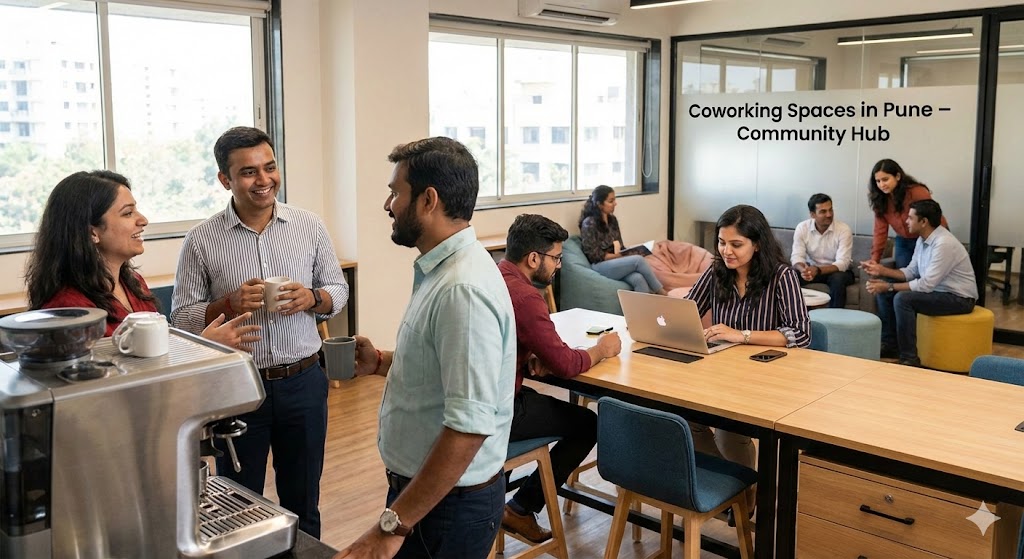
Coworking spaces in Pune turn solo work into instant business connections. Unlike LinkedIn cold messages or expensive conferences, daily coworker interactions create genuine relationships that lead to clients, collaborators, and opportunities. Coffee Machine Conversations Start Deals The pantry coffee/tea machine works magic in coworking spaces in Pune. Everyone gathers 4-5 times daily. Two-minute chats reveal needs: “I need a React developer” matches perfectly with the full-stack engineer grabbing sugar next to you. No awkward intros needed. Casual proximity builds trust faster than formal networking events. First ₹25K client projects often start here. Desk Neighbors Become Your Team Sitting next to diverse professionals daily creates organic collaboration. Coworking spaces in Pune mix UI designers, content writers, SaaS founders, and digital marketers. “Can you review this landing page?” becomes “Let’s build this together.” Your ₹5K project partner refers ₹50K clients. Proximity accelerates trust 10x faster than remote Slack relationships. “90 days turns coworkers into your referral army.” Weekly Events Without Event Cost Coworking spaces in Pune host free founder meetups, pitch practice, skill shares, and investor office hours. No ₹2K entry fees, no travel time. Just show up after work. One investor introduction from Thursday’s pitch night funds your next 6 months runway. Event value: ₹5 lakhs minimum. Client Introductions Flow Naturally Coworkers become your warm referral network. “I have an e-commerce client needing Shopify help” reaches 5 relevant people instantly. Coworking spaces in Pune turn strangers into advocates within 90 days. Cold outreach conversion: 2%. Warm coworker referrals: 45%. Math doesn’t lie. Serendipity Multiplies Opportunities Coworking spaces in Pune create “bumpable” moments. Hallway conversations, printer line chats, lunch table talks uncover needs you never expected. The tax consultant mentions needing content help. The content writer needs accounting. Real Pune examples:UI designer meets SaaS founder = ₹2 lakh redesign projectDigital marketer overhears fintech pitch = ₹75K monthly retainerSolo developer joins agency overflow work = ₹15K/month steady gigsContent writer lands startup blog retainer from elevator chat Traditional offices isolate you behind closed doors. Coworking spaces in Pune make luck systematic through proximity, shared routines, and natural conversations that happen 50+ times daily. Your network compounds while competitors send cold DMs.es isolate you. Coworking spaces in Pune make luck systematic.  

Uncategorized

Pune Professionals Love Coworking

Coworking spaces in Pune solve everyday work frustrations for freelancers, startup founders, remote employees, and small teams. No complicated pitches just practical, no nonsense benefits that make work easier and life better. Here’s why 10,000+ Pune professionals choose coworking every month. 1. Say Goodbye to Home Office Distractions The kitchen table office comes with kids asking questions, pets jumping on your lap, doorbells ringing, and laundry piles staring at you. Coworking spaces in Pune give you a dedicated professional place where you can focus 100% on work. You walk in at 9 AM, sit at your desk, and get into “work mode.” No household chaos, no family interruptions. By 6 PM, you leave feeling accomplished with a full day’s work done. 2. Look Like a Pro Without Paying Office Rent Meeting clients at your 1BHK or shouting over Starbucks noise kills credibility. Coworking spaces in Pune provide air conditioned meeting rooms, smiling receptionists who greet your visitors, and a business address in Hinjewadi IT Park or Kharadi EON. When your client walks in and sees a professional setup, they assume you’re an established company. You pay startup prices (₹8-15K/seat) instead of enterprise leases (₹25K+/seat). 3. Internet That Actually Works When Clients Call Home Jio/Airtel drops to 2 Mbps right when your US client joins the Zoom call. “Can you hear me now?” becomes your most-used phrase. Coworking spaces in Pune guarantee enterprise-grade 100-500 Mbps fiber optic internet with UPS power backup. No more awkward silences or “let me call you back” moments. Your presentations run smoothly, screen shares load instantly, and clients stay impressed. 4. Smart People Sitting Next to You Solo work gets lonely fast. No one to bounce ideas off, ask quick questions, or celebrate small wins. Coworking spaces in Pune surround you with developers, UI/UX designers, digital marketers, content writers, and fellow founders. During coffee breaks, you discover the React developer sitting 3 desks away. The SEO expert next to the printer becomes your first ₹25K client. One casual chat turns into your next collaborator. 5. Work Actually Ends at 6 PM The home office blurs boundaries. You check emails at 10 PM “just to see.” Weekends become catch up time. Coworking spaces in Pune create natural structure you commute to work, you leave work behind when you leave the building. Evenings become family time. Weekends stay sacred. You sleep better knowing work stays at the office. Burnout risk drops dramatically. “Coworking spaces in Pune solve 90% of home office frustrations with one monthly payment.” Bonus: The Coffee Machine Networking Effect Pune coworking spaces have one magical spot: the coffee/tea machine. Everyone gathers there 3-4 times daily. Coworking spaces in Pune turn these 2-minute breaks into your most valuable business development time. “Hi, what do you do?” conversations uncover your next client, partner, or even investor connection. The coffee costs ₹10. The relationship lasts years. Why Pune Coworking Beats Working Elsewhere Cafes have unreliable WiFi and 2-hour limits. Home offices lack structure and professionalism. Traditional leases demand 6-month deposits you don’t have. Coworking spaces in Pune hit the perfect balance: professional environment, startup pricing, flexible terms. Pick the right neighborhood (Hinjewadi for tech, Kharadi for client-facing, Baner for bootstrappers), test the WiFi speed during a tour, attend one networking event, and you’re set.

Technology Is Transforming Coworking Spaces
Uncategorized

How Technology Is Transforming Coworking Spaces in 2026

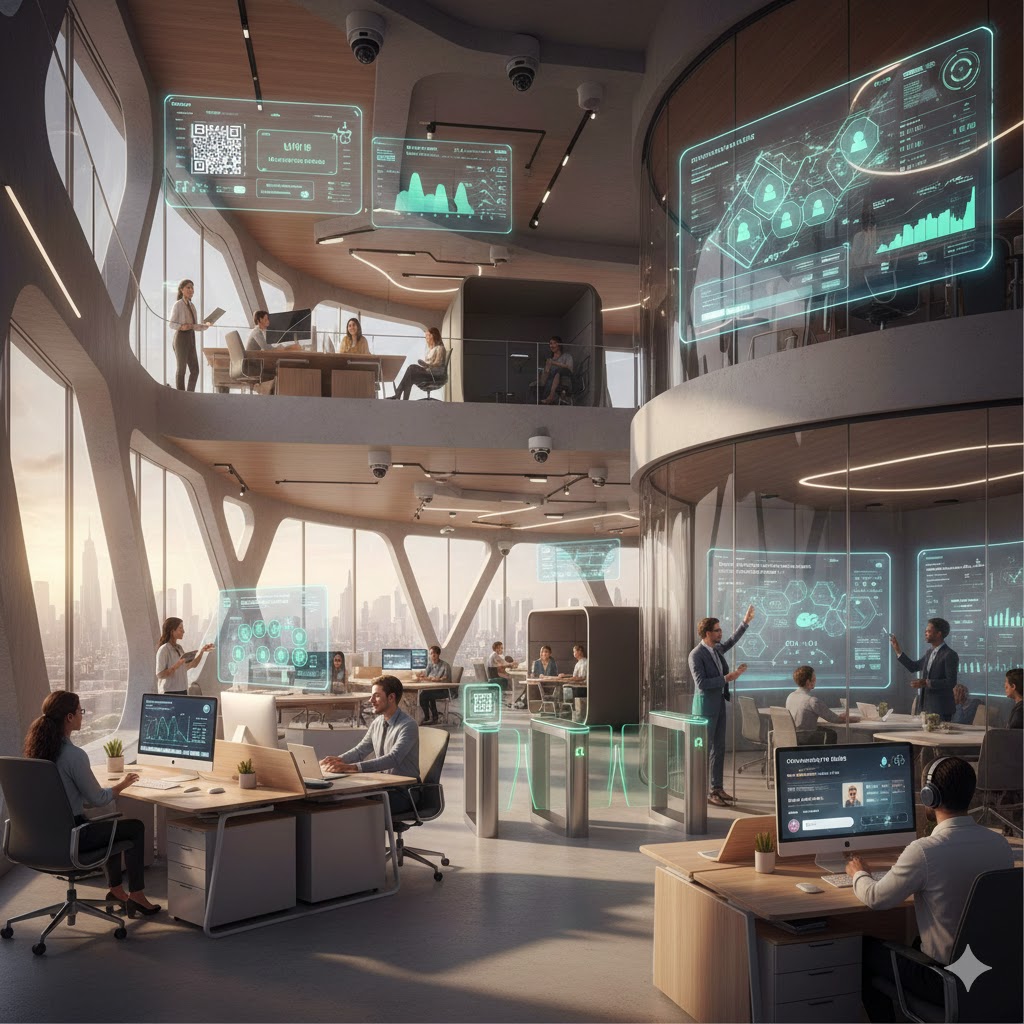
Coworking technology trends 2026 are revolutionizing flexible workspaces with seamless booking, AI personalization, smart security, and data driven operations. From frictionless member experiences to predictive space management, tech makes coworking smarter, safer, and more efficient for freelancers, startups, and corporate teams.​ Frictionless Mobile-First Booking and Access Mobile apps now handle everything from instant hot-desk booking to digital check-in, eliminating front desk queues and paperwork. Members scan QR codes or use facial recognition for touchless entry, while real-time availability shows exactly which desks, pods, or meeting rooms are free across multiple floors.​ Digital wallets integrate UPI payments, auto top ups, and usage based billing, perfect for India’s variable income freelancers and scaling startups. No more fixed monthly fees pay only for what you use.​ AI-Powered Personalization and Space Optimization Coworking technology trends 2026 include AI that learns member preferences and suggests the perfect desk based on work style, noise tolerance, natural light needs, and team proximity. Smart sensors track real time occupancy, predict peak hours, and auto adjust lighting, temperature, and seating arrangements.​ For operators, AI dashboards forecast demand, optimize cleaning schedules, and flag maintenance issues before they disrupt members. This data driven approach maximizes revenue while minimizing waste.​ Smart Security and Enterprise-Grade Compliance Modern coworking spaces offer biometric access (face/voice), geofencing for visitor tracking, and CCTV with AI anomaly detection. Corporate clients get private VLANs, encrypted guest Wi-Fi, and compliance-ready meeting rooms with screen recording controls.​ India’s growing GCC demand drives features like SOC2 compliant data centers, NDA protected zones, and audit trails for regulated industries. Security becomes a selling point, not just a checkbox.​ “Coworking technology trends 2026 make workspaces intelligent—AI knows you better than your current office does.” IoT-Enabled Smart Buildings Internet of Things connects everything: smart lighting dims when areas empty, HVAC adjusts based on occupancy, and air quality sensors trigger ventilation or notify maintenance. Energy savings reach 25-35% while improving member comfort.​ Plug and play AV systems with wireless presentation and AI transcription make meetings effortless. No cables, no IT support calls just seamless collaboration.​ Community Apps and Member Engagement Coworking technology trends 2026 extend beyond operations into community building. Internal apps let members book 1:1 sessions, RSVP for workshops, message collaborators, or find skills (“Who does Canva design?”). Gamification rewards frequent visitors with credits or VIP event access.​ Event calendars sync with Google/Outlook, while push notifications announce networking nights, skill shares, or free coffee hours. Technology strengthens the human connections that define great coworking.​ VR/AR for Hybrid Collaboration Virtual reality meeting rooms let remote teammates “sit” together in 3D spaces with digital whiteboards. AR desk markers show real time availability and member profiles when you look at a workstation. These tools bridge physical distance while maintaining the energy of face to face work.  

sustainable workspace
Uncategorized

Sustainable and Inclusive Coworking Spaces

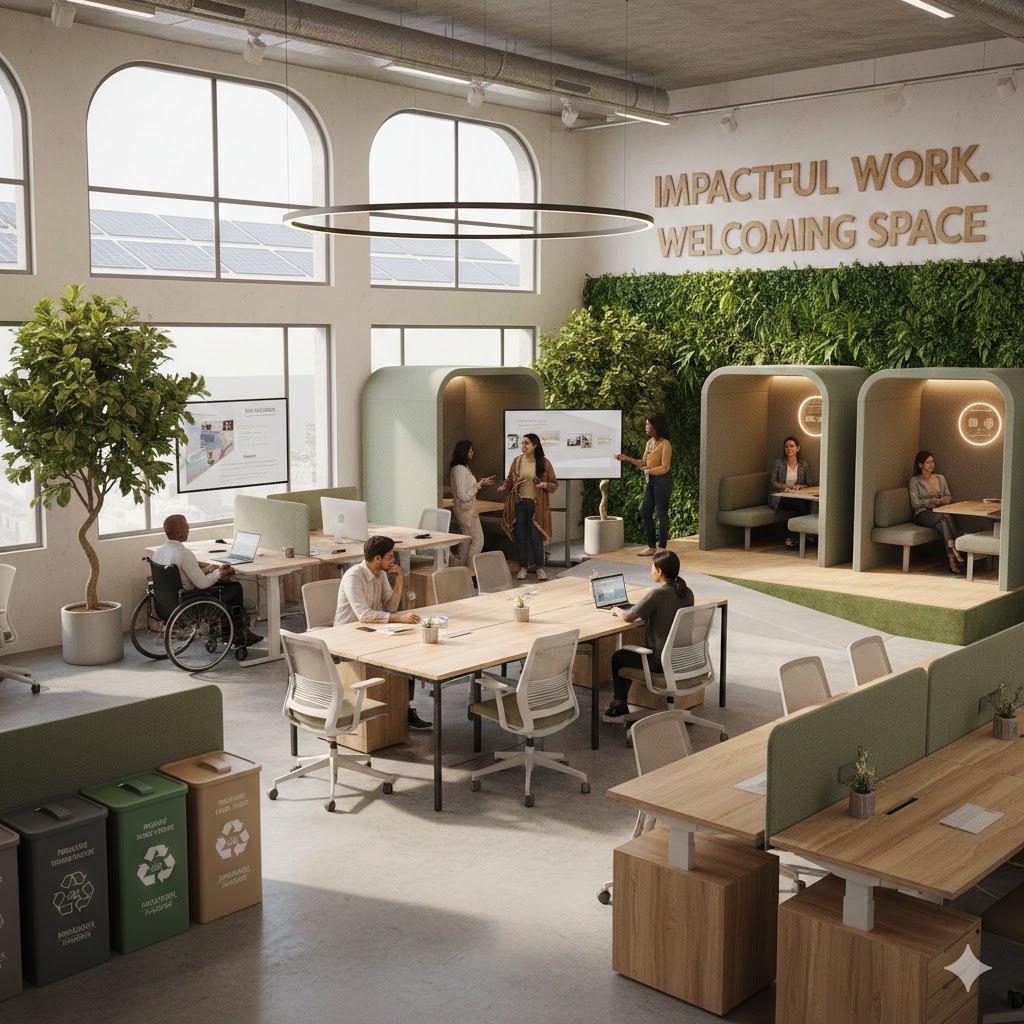
Modern professionals are not just asking “Where can I work?” but also “What kind of impact does my workspace create?” and “Will I feel welcome there?” Sustainable and inclusive coworking spaces reduce environmental impact while welcoming everyone with green design and accessibility​ Why Coworking Is Naturally More Sustainable Shared spaces use resources more efficiently than individual offices because desks, meeting rooms, printers, lighting, and HVAC are all pooled instead of duplicated across multiple locations. Studies show that coworking models can significantly lower carbon footprint compared to traditional offices by maximizing occupancy and reducing wasteful underused space.​ Eco-focused coworking operators in India are also adopting LED lighting, smart HVAC, and better daylight use to cut energy consumption while improving comfort for members.​ Green Practices You See in Modern Coworking Spaces Sustainability is moving from “nice to have” to standard expectation in coworking design. Common green practices now include:​ These steps lower utility bills and attract ESG conscious startups and corporates who want their office choice to reflect their values. Sustainable and inclusive coworking spaces now prioritize recycled furniture and solar power.​ “TStep-free access, quiet zones, and green energy turn a regular office into a truly modern coworking community.” 
 Designing Spaces That Everyone Can Access A truly modern coworking space is not just beautiful it is usable by as many people as possible, including those with mobility, sensory, or other accessibility needs. Key elements include step-free entry, ramps, wide corridors, and automatic doors so wheelchair users can move comfortably.​ Accessible restrooms, height-adjustable desks, ergonomic chairs, and clear, high-contrast signage (sometimes with Braille) make everyday tasks easier and safer for everyone. These features send a clear message: all professionals are welcome here.​ Supporting Neurodiverse and Sensitive Professionals Inclusivity also means thinking about people with autism, ADHD, anxiety, or sensory sensitivities. Many progressive coworking spaces now offer quiet zones, low-stimulation rooms, or phone booths with controlled lighting and sound to help members who need calm environments for deep work.​ Simple measures like reducing harsh fluorescent lighting, managing noise levels, and communicating rules clearly can dramatically improve the experience for neurodiverse professionals and, in reality, benefit every member.​ Policies and Culture That Reflect Inclusion Physical design is only one part; policies and culture must also reflect inclusivity. Examples include:​ These policies make sustainable and inclusive coworking spaces truly welcoming for diverse members. When members see themselves represented in the imagery, language, and leadership of a coworking space, they feel more confident bringing their whole selves to work.

Uncategorized

Coworking Trends 2026: 7 Key Predictions for Flexible Workspaces

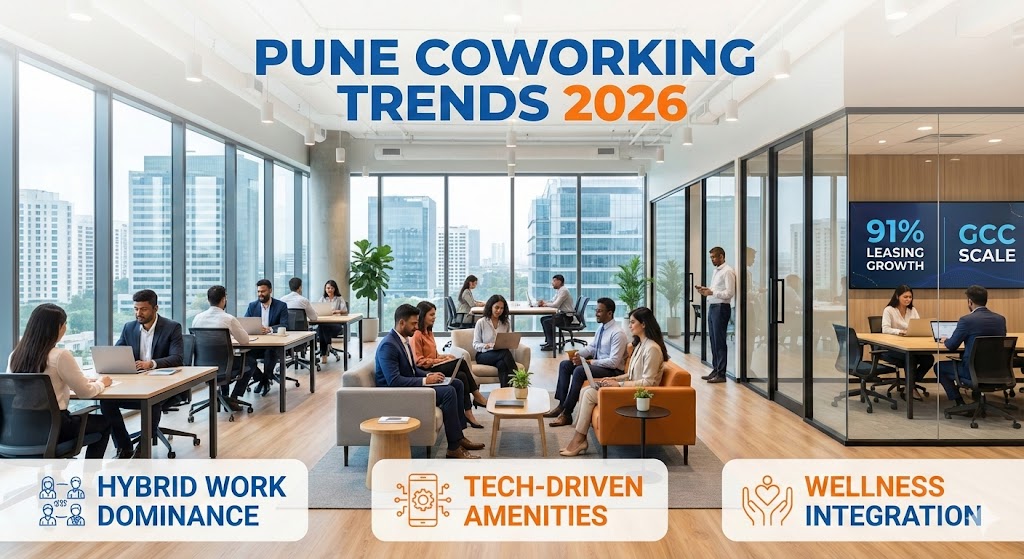
Coworking trends 2026 will transform flexible workspaces with AI operations, super-hubs, and wellness-first design as hybrid work matures and technology accelerates.red workspaces.​ Coworking Trends 2026: Super-Hubs and Networks-Collaboration Networks Individual coworking spaces will stop competing and start collaborating to create “super hubs” that combine the best of multiple operators. Coworking trends 2026 feature ‘super-hubs’ combining coworking + cafes + maker spaces + event venues under one roof, where members get seamless access across specialized locations.​ This trend solves the “one size fits none” problem by letting freelancers find creative studios, startups access accelerators, and corporates book private suites all through one membership.​ AI Takes Over Operations, Humans Focus on Community AI agents will handle booking, scheduling, space optimization, billing disputes, and even basic member onboarding, freeing staff to build relationships instead of fighting software. Smart sensors track real-time occupancy, predict peak hours, and auto-adjust lighting/HVAC for energy savings.​​ Members benefit from frictionless experiences: instant hot desk availability, personalized space recommendations, and predictive maintenance that prevents downtime.​ “Hospitality-first wins: Members stay for the experience, not the lease.” Hospitality-First Model Replaces Real Estate Mindset Coworking operators will adopt luxury hotel standards: barista trained baristas, concierge services, weekly deep cleaning, and mood-based lighting/ambiance. Retention jumps when members feel pampered rather than like office tenants.​ This shift attracts premium corporate clients who want white glove service for their teams without owning buildings.​ Wellness Evolves into Bio-Intelligent Design Beyond ping-pong tables, 2026 spaces will use circadian lighting, biophilic walls, air purification matching hospital standards, and acoustic engineering for perfect sound balance. Nap pods become “90-minute recovery suites” with sleep-tracking tech.​ Data shows these environments boost cognitive performance 20-30%, making wellness a productivity investment, not a perk.​ Polarization: Big Scale vs Niche Communities The market splits into two winners: massive operators dominating cities with 1000+ seats, or hyper niche spaces (crypto founders, fashion designers, wellness coaches) building cult like communities. Middle-ground generic spaces struggle most.​ Your Pune location can thrive by specializing in Maharashtra startups, regional SMEs, or creative agencies rather than competing with generic chains.​ Flexible Memberships Go Credit-Based Fixed monthly fees disappear. Members buy credits usable across hot desks, meeting rooms, events, or even partner services (printing, legal consults). Usage analytics let spaces offer personalized “top-up” plans before credits run low.​ This model perfectly suits India’s variable-income freelancers and scaling startups.​ Corporates Drive 60%+ of Revenue Growth SMEs and Fortune 500 companies will account for most new memberships as they replace owned offices with managed flex space. Expect demand for private floors, branded lounges, and secure VLANs alongside community access for junior staff.​ Tier-2 cities like Pimpri Chinchwad become corporate “near home” hubs for Mumbai/Pune commuters.

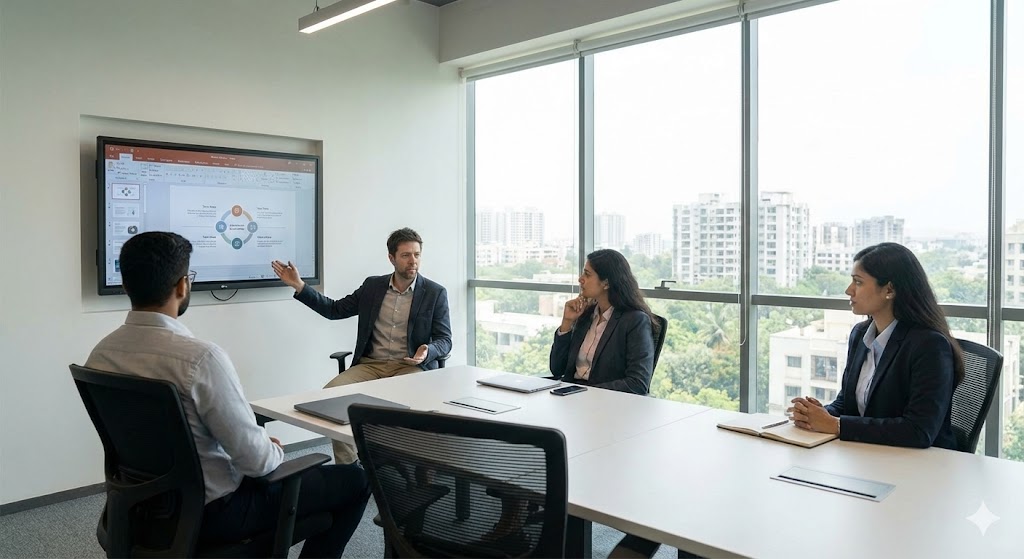
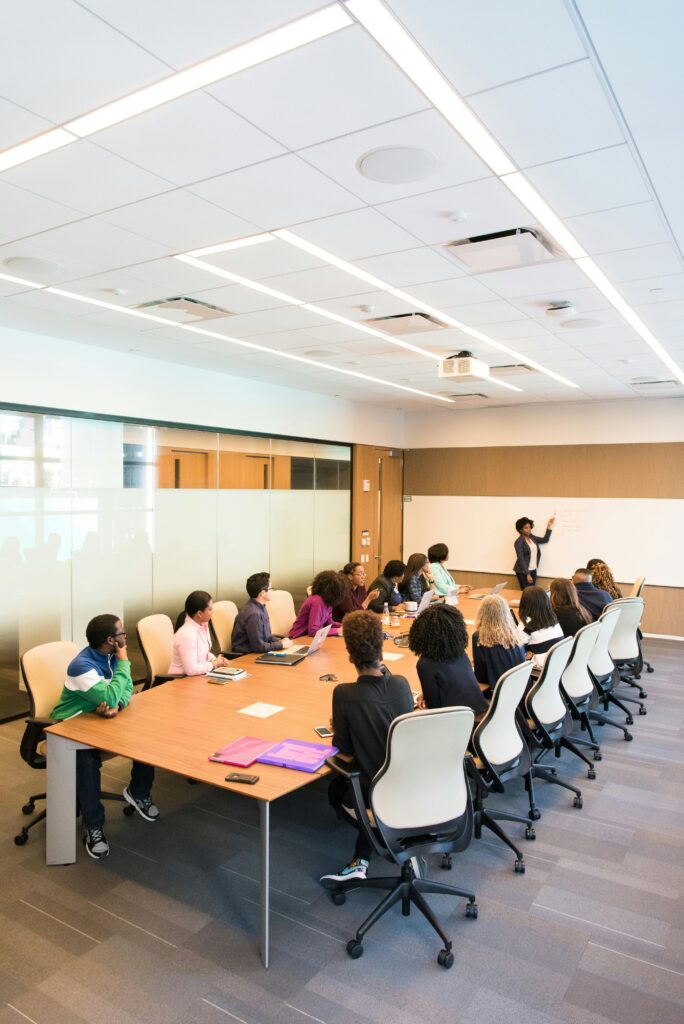
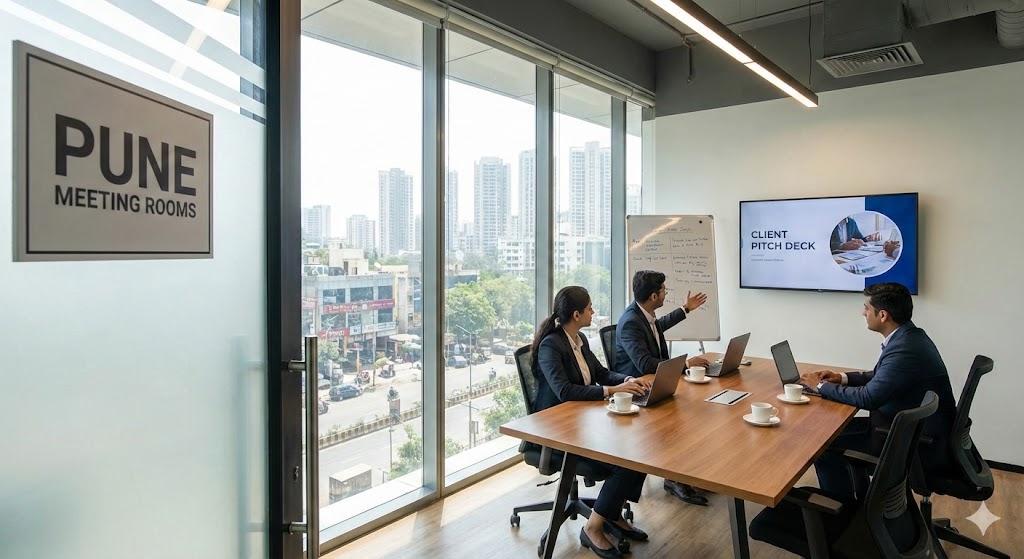
Professional team engaged in a collaborative boardroom meeting with a presentation in progress.
Uncategorized

Learning and events in coworking spaces

Modern coworking spaces are no longer just about desks and Wi‑Fi; they are active learning hubs where members gain skills, contacts, and opportunities through structured events and programs. For freelancers, startups, remote employees, and corporate teams, this learning layer often becomes the real reason they stay long term.​ Skill-Building Workshops and Masterclasses Many coworking operators run regular workshops on topics like digital marketing, sales, finance basics, branding, productivity tools, and even AI for business. These sessions give members practical knowledge they can apply immediately to grow their projects and careers.​ Guest speakers—founders, investors, coaches, or functional experts share real-life experiences, which is more actionable than generic online content. Over time, members start seeing their coworking space as an ongoing classroom that keeps them ahead of trends.​ Networking Events and Community Mixers Meetups, pitch nights, open mics, and casual mixers help members connect beyond “hello” at the coffee machine. These events create a relaxed environment where people can talk about their work, exchange ideas, and explore collaborations.​ For early-stage founders or solo professionals, one conversation at a networking evening can turn into a new client, co-founder, or partner, making the membership fee feel like an investment rather than an expense.​ Mentorship, Office Hours, and Expert Clinics Some coworking spaces partner with mentors, consultants, or startup enablers to offer “office hours” where members can book short 1 to 1 sessions. Topics often include business models, fundraising readiness, legal basics, branding, or technology choices.​ 
 “When a workspace invests in learning, members stop renting seats and start building futures.” These focused conversations help members avoid costly mistakes and move faster, especially for those who do not have formal business education or access to corporate-style guidance.​ Coworking-Led Community Projects and Collaborations Coworking communities sometimes form internal project groups like a marketing circle, founders’ club, or creator collective where members collaborate on shared campaigns or products. This turns the space into a live ecosystem where skills and resources circulate rather than everyone working in isolation.​ For example, a designer, content writer, and developer within the same space might jointly serve a client that none of them could handle alone. These collaborations strengthen the community and show new members what is possible.​ Learning for Different Member Types Good coworking programs are designed with multiple member profiles in mind: freelancers, startup teams, remote employees, and corporate project groups. For instance, weekday evening workshops may target founders and freelancers, while lunchtime talks suit remote employees and corporate teams.​ By offering varied formats talks, hands-on labs, panels, and peer circles the space can support people at different skill levels without overwhelming anyone.

Group of young professionals engaged in a collaborative meeting in a modern office setting.
Uncategorized

How Coworking Spaces Boost Productivity and Work-Life Balance

For many professionals, the biggest challenge is not finding work but staying focused and maintaining a healthy life outside it. Coworking spaces create structure, remove distractions, and provide support systems that make both productivity and work-life balance easier to achieve. Clear Boundaries Between Work and Home Working from home blurs lines: laptops on dining tables, calls in bedrooms, and no real “off” time. In a coworking space, members physically “go to work” and “leave work,” which sends a strong mental signal that helps them switch modes more easily.​ Leaving the workspace at the end of the day reduces the urge to check emails late into the night and makes evenings and weekends feel more genuinely free.​ Focus-Friendly Design and Fewer Distractions Coworking spaces are intentionally designed to support deep work: quiet zones, phone booths, reserved meeting rooms, and ergonomic seating all reduce friction and interruptions. This is very different from cafĂ©s or home environments, where noise, visitors, or family responsibilities can constantly break concentration.​ Having reliable Wi‑Fi, power backup, and ready to use meeting rooms means professionals do not waste time solving basic infrastructure problems and can focus on their core tasks instead.​ “A well-designed coworking space turns discipline into a habit, not a daily struggle.” Routines That Build Productive Habits Regular commute, fixed or semi-fixed work hours, and familiar surroundings help members build consistent habits. Over time, arriving at the same desk or zone trains the brain to associate that environment with focused work, which increases productivity without extra effort.​ Many coworking spaces also host time boxed events like workshops, stand-up sessions, or community hours, which naturally structure the day into productive blocks and social breaks.​ Community Support Reduces Stress Coworking communities bring together people facing similar challenges: managing clients, deadlines, and personal responsibilities. Casual conversations, peer advice, or simple encouragement during breaks reduce the sense of isolation and stress that solo workers often feel.​ Knowing there are others around who understand your journey can make difficult days feel lighter and prevent burnout over the long term.​ Built-In Wellness and Micro-Breaks Modern coworking spaces integrate wellness through natural light, plants, comfortable lounging areas, and sometimes yoga or meditation corners. These elements encourage members to take short, healthy breaks that refresh the mind instead of doom scrolling on social media at home.​ Healthy micro-breaks—stretching, a walk to the coffee machine, or a quick chat—help maintain energy across the day and support better sleep and well-being after work.​ Flexibility for Different Life Stages For parents, students, side hustlers, and remote employees, flexible timings and different membership options allow work to fit into real life, not fight against it. People can choose early mornings, late evenings, or a few days a week based on their family or study schedule, without sacrificing access to a professional environment.​ This flexibility makes it easier to maintain hobbies, family time, and personal development while still meeting professional commitments.  

Uncategorized

The Cost Benefits of Coworking Spaces for Indian Businesses

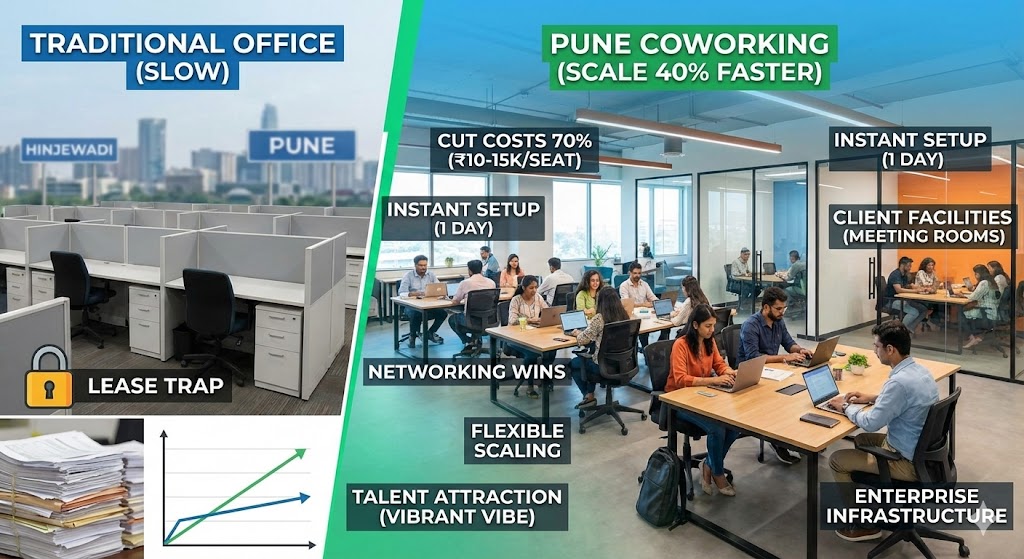
Coworking spaces offer Indian businesses massive cost savings compared to traditional offices, making them ideal for startups, SMEs, and solopreneurs in cities like Pune and Mumbai. These flexible workspaces eliminate huge upfront costs while providing premium amenities, helping businesses focus on growth rather than real estate headaches. Eliminate Massive Security Deposits Traditional Indian office leases demand 6-11 months’ rent as security deposit often ₹3-10 lakhs for even small spaces. Coworking spaces charge zero or minimal deposits with monthly billing starting at ₹5,000-15,000 per seat, including all utilities and maintenance. This cash flow advantage lets bootstrapped businesses invest in marketing, hiring, or product development instead of tying up capital in real estate. Scalable plans mean you pay only for seats you need today. No Fit-Out or Furniture Expenses Setting up a traditional office requires ₹1,000-2,000 per sq ft for interiors, furniture, AC, wiring, and partitions—totaling lakhs before Day 1. Coworking spaces come fully furnished with ergonomic chairs, high-speed internet (100-1000 Mbps), power backup, and modern conference rooms ready to use. Switching to coworking saves 70-80% on setup costs while getting premium infrastructure that would cost crores to replicate independently. Slash Operational Overheads Coworking memberships bundle housekeeping, security, electricity, water, tea/coffee, and reception services—expenses that add ₹20,000-50,000 monthly for standalone offices. Hidden costs like generator maintenance, pest control, and repairs vanish entirely. For a 5-person team, total coworking cost might be ₹75,000/month vs ₹2-3 lakhs for equivalent traditional office operations. “Coworking delivers enterprise-grade offices at startup prices—best ROI decision for Indian SMEs.” Flexible Scaling Without Penalties Growing from 2 to 20 people? Traditional leases lock you into 3-5 year terms with penalties for early exit. Coworking offers hot desks, dedicated desks, private cabins, or entire floors with 1-month notice periods and no lock-in clauses. Downsizing during lean periods works the same way—reduce seats without losing deposits or facing vacancy losses. Professional Address and GST Benefits Use a premium business address in Pimpri or Hinjewadi for ₹2,000-5,000 extra monthly, plus mail handling and client reception. Many spaces offer GST-compliant invoicing and help with company registration, saving accounting headaches. This professional setup builds client trust while keeping compliance costs under ₹10,000/year vs standalone office complexities. Real ROI: Case Studies from Indian Businesses A Pune-based fintech startup saved ₹18 lakhs in Year 1 by choosing coworking over leasing, using savings for product launch. A 10-member marketing agency cut operational costs 65%, reinvesting in client acquisition to double revenue within 18 months.

Workspace in pune
Uncategorized

How Corporates Use Flexible Workspaces Strategically

Large companies once preferred long-term traditional offices, but now many are actively adopting coworking spaces to stay agile, attract talent, and reduce risk. For enterprises, coworking is no longer just a backup option; it has become a core part of workplace strategy. Flexible footprint and cost optimization For Corporates Coworking spaces for corporate teams are becoming a core part of workplace strategy, not just a backup option. Large companies now use these flexible spaces to stay agile, attract talent, and reduce real-estate risk. Many enterprises also place project teams or innovation units in coworking spaces to escape bureaucratic environments and work in more flexible, startup-like surroundings. This setup helps them move faster while keeping overhead predictable. Attracting and retaining talent Younger professionals and high-skill candidates increasingly prefer modern, community-driven spaces over rigid, conventional offices. By offering coworking access, corporates signal that they support hybrid work, flexibility, and better work-life balance. Employees get the choice to work closer to home, avoid long commutes, and still enjoy a productive, professional environment. This improves satisfaction, reduces burnout, and makes the company more attractive in competitive talent markets. “When corporate teams sit beside startups and creators, fresh ideas become part of everyday work.”   Innovation through external community Coworking spaces gather startups, freelancers, and small businesses from diverse domains. When corporate teams share this environment, they gain exposure to fresh ideas, emerging technologies, and different problem-solving approaches. Many enterprises use coworking hubs as “innovation labs” where they can: This cross-pollination is difficult to achieve in isolated corporate campuses. Supporting hybrid and distributed work As hybrid work becomes standard, companies need a network of flexible spaces so employees can work from multiple locations. Coworking spaces act as satellite offices, especially in tier-2 and tier-3 cities, giving corporates local presence without setting up full branches. Employees can choose: This model improves resilience, especially during disruptions, and supports inclusive hiring from different regions. Security, privacy, and customization Modern coworking operators increasingly offer enterprise-grade options like secure VLANs, private cabins or floors, access control, and NDA-friendly meeting rooms. Corporates can get the best of both worlds: the energy and flexibility of shared space plus the privacy and compliance their policies demand. Custom branding, dedicated zones, and tailored IT setups help employees feel part of their company culture even while sitting inside a shared workspace.

Workspace entrance
Uncategorized

Coworking Space Design Trends for 2025

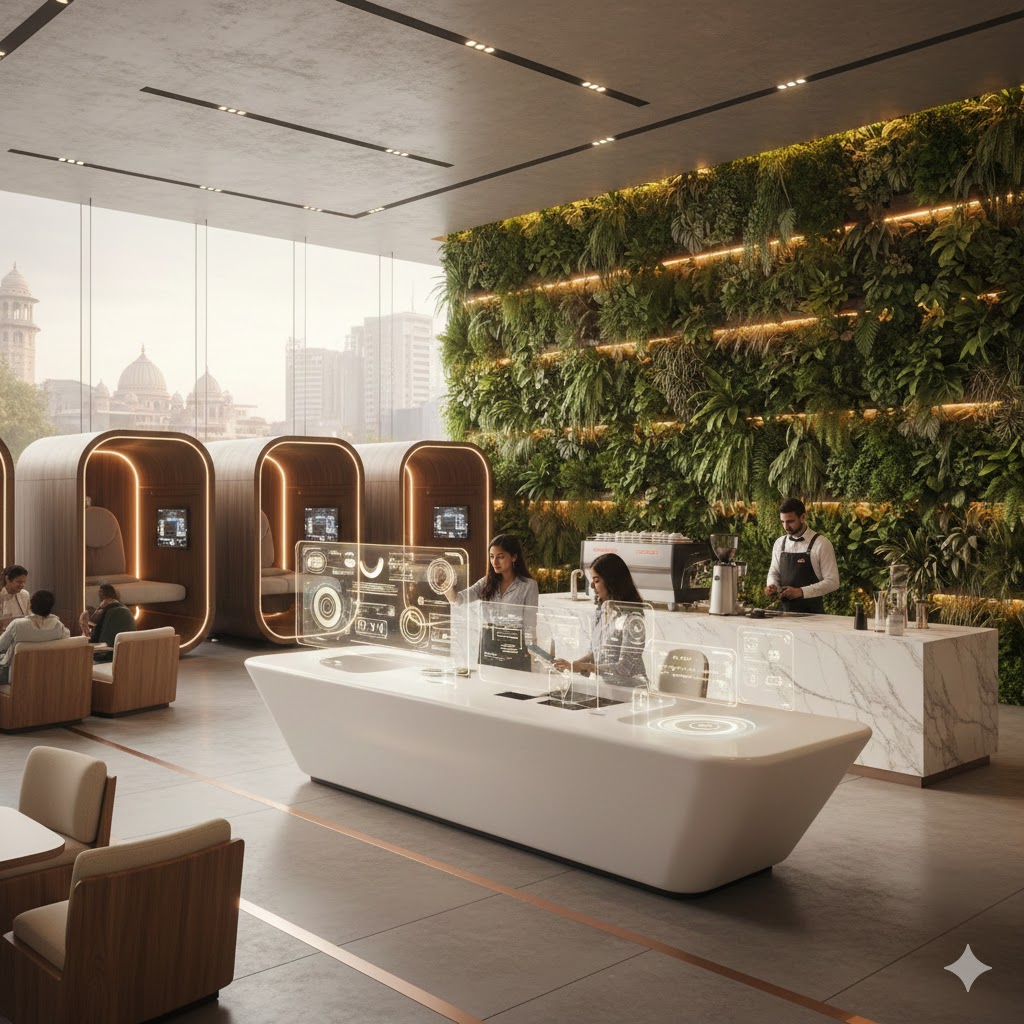
Coworking spaces in 2025 are redefining work environments through innovative design that prioritizes human well-being, adaptability, and sustainability. These trends blend biophilic elements, smart technology, flexible layouts, and wellness features to craft dynamic hubs where freelancers, startups, and hybrid teams can innovate and connect seamlessly.​ Biophilic Design: Nature as the Ultimate Productivity Booster Biophilic design leads the charge by weaving natural elements into every corner, from living green walls and cascading plant installations to water features and earthy material palettes. Large floor-to-ceiling windows flood spaces with natural light, while wooden accents, stone textures, and indoor herb gardens create serene, restorative atmospheres that lower cortisol levels and spark creativity. This approach extends to outdoor-inspired zones like rooftop terraces or atrium gardens, perfect for brainstorming sessions or quick breaks. Studies show such designs improve cognitive function by 15-20%, making them essential for high-focus professions like coding, writing, and strategy. For Indian coworking spaces, incorporating local flora like bamboo and monsoon-resilient plants adds cultural relevance and cost effectiveness.​ Modular and Multi Functional Furniture: Flexibility Redefined Gone are static desks; 2025 favors modular systems with reconfigurable tables, acoustic pods, wheeled partitions, and hybrid sit-stand workstations. These allow instant shifts from solo deep work nooks to collaborative war rooms, accommodating solo solopreneurs or 10-person pitches without renovation costs. “Modular design turns every square foot into a canvas for collaboration and innovation.”​ Breakout areas double as lounges with ottomans that stack into benches, while magnetic walls serve as whiteboards or mood boards. This agility supports India’s diverse workforce, from gig economy creators to scaling SMEs, optimizing space in urban hubs like Mumbai and Pune.​ Wellness Ecosystems: Holistic Health in Every Detail Wellness moves beyond gimmicks into integrated ecosystems with dedicated zones for yoga, meditation pods, circadian lighting that mimics daylight cycles, and air-purifying biowalls. Ergonomic nests with adjustable lumbar support, noise-cancelling lounges, and even nap capsules address burnout head-on. Sensory elements like aromatherapy diffusers and soundscapes of gentle waves enhance mental clarity. In high-stress markets like Maharashtra, these features boost retention by fostering work-life harmony, with spaces offering on-site nutrition bars or fitness trackers for members.​ Smart Tech and Sustainability: Future-Proof Efficiency IoT sensors automate lighting, HVAC, and occupancy for energy savings up to 30%, paired with app based booking for seamless hot desking. Touchless kiosks, AI chatbots for concierge services, and VR collaboration rooms enable global teamwork without travel. Sustainability shines via recycled composites, solar panels, rainwater harvesting, and zero-waste kitchens trends vital for eco-aware Gen Z entrepreneurs. Indian spaces leverage passive cooling and vernacular architecture for tropical climates, slashing bills while earning green certifications.​ Community Hubs: Design That Sparks Serendipity Central hearths like communal kitchens with chef’s tables, game zones, and amphitheater style event spaces encourage organic interactions. Curved communal tables and visibility corridors promote “bumpable” encounters, fueling collaborations that turn strangers into partners.

Scroll to Top