
Large companies once preferred long-term traditional offices, but now many are actively adopting coworking spaces to stay agile, attract talent, and reduce risk. For enterprises, coworking is no longer just a backup option; it has become a core part of workplace strategy.
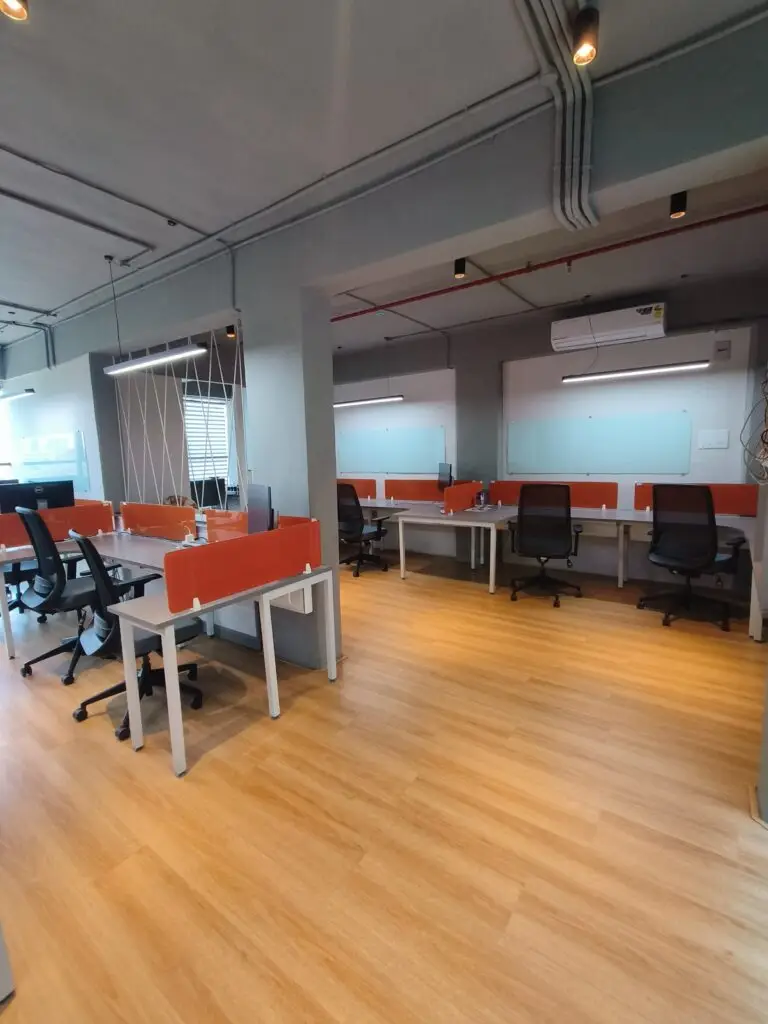
Flexible footprint and cost optimization For Corporates
Coworking spaces for corporate teams are becoming a core part of workplace strategy, not just a backup option. Large companies now use these flexible spaces to stay agile, attract talent, and reduce real-estate risk.
Many enterprises also place project teams or innovation units in coworking spaces to escape bureaucratic environments and work in more flexible, startup-like surroundings. This setup helps them move faster while keeping overhead predictable.
Attracting and retaining talent
Younger professionals and high-skill candidates increasingly prefer modern, community-driven spaces over rigid, conventional offices. By offering coworking access, corporates signal that they support hybrid work, flexibility, and better work-life balance.
Employees get the choice to work closer to home, avoid long commutes, and still enjoy a productive, professional environment. This improves satisfaction, reduces burnout, and makes the company more attractive in competitive talent markets.
“When corporate teams sit beside startups and creators, fresh ideas become part of everyday work.”
Innovation through external community
Coworking spaces gather startups, freelancers, and small businesses from diverse domains. When corporate teams share this environment, they gain exposure to fresh ideas, emerging technologies, and different problem-solving approaches.
Many enterprises use coworking hubs as “innovation labs” where they can:
- Run hackathons and design sprints.
- Collaborate with startups or niche experts.
- Host meetups and talks to strengthen their brand in the startup ecosystem.
This cross-pollination is difficult to achieve in isolated corporate campuses.
Supporting hybrid and distributed work
As hybrid work becomes standard, companies need a network of flexible spaces so employees can work from multiple locations. Coworking spaces act as satellite offices, especially in tier-2 and tier-3 cities, giving corporates local presence without setting up full branches.
Employees can choose:
- Headquarters on some days.
- Coworking near home on others.
- Remote work when needed.
This model improves resilience, especially during disruptions, and supports inclusive hiring from different regions.
Security, privacy, and customization
Modern coworking operators increasingly offer enterprise-grade options like secure VLANs, private cabins or floors, access control, and NDA-friendly meeting rooms. Corporates can get the best of both worlds: the energy and flexibility of shared space plus the privacy and compliance their policies demand.
Custom branding, dedicated zones, and tailored IT setups help employees feel part of their company culture even while sitting inside a shared workspace.